


What Is Red Light Therapy and How Could It Affect Hair Follicles?
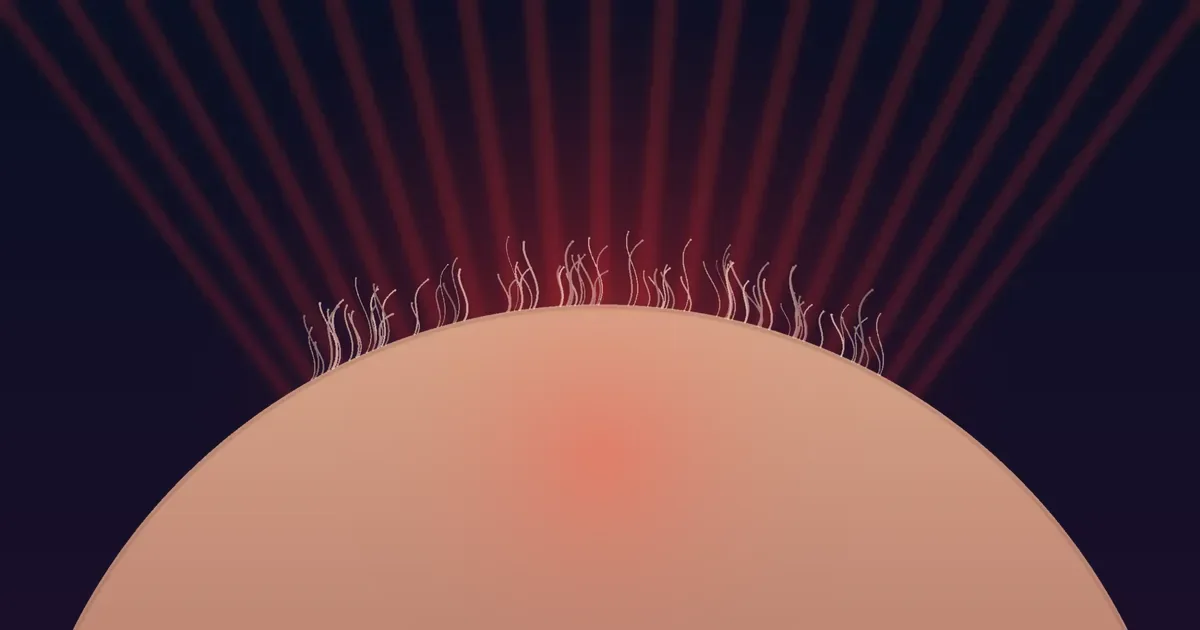
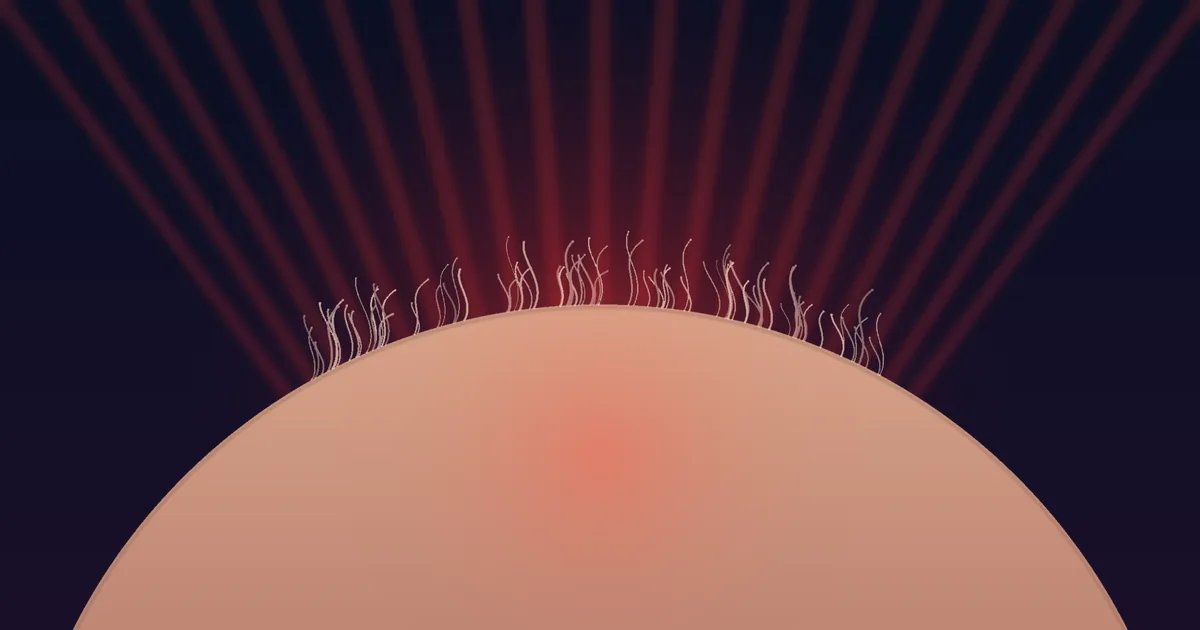
Red light therapy for hair loss goes by a few names - low-level laser therapy, photobiomodulation, LLLT. Whatever the label, the core idea is the same: shine a specific wavelength of light on the scalp and nudge the hair follicle toward more energy production.
The science traces back to 1967 (when Hungarian researcher Endre Mester shaved mice)hit them with a low-power ruby laser, and noticed their hair grew back faster than expected. Nobody set out to cure baldness. Mester was testing laser effects on cancer. The hair growth came as a side observation, one that now supports an entire device industry.
The proposed mechanism runs through the mitochondria. Dermal papilla cells, which sit at the base of the follicle and help steer the growth cycle, contain mitochondria packed with an enzyme called cytochrome c oxidase. This enzyme absorbs red and near-infrared photons. When it does, a chain of events follows: ATP production rises, a brief burst of reactive oxygen species acts as a signal, and nitric oxide is released. Put simply, the cell gets a jolt of energy it can spend on growth.
That matters in androgenetic alopecia, the most common form of hair loss. Miniaturization shrinks the follicle and shortens the growth phase, partly because the dermal papilla runs short on energy. The therapy aims to give those cells time and metabolic capacity.
Consumer devices work mostly in two wavelength bands, and red, around 630-670 nm, reaches the mid-dermis. The near-infrared band, roughly 810-880 nm, goes deeper. Home caps typically deliver 20-80 mW/cm² and are worn 6-12 minutes daily. Clinical studies usually aim for an energy dose of 1 to 8 J/cm².
One honest limitation: the follicle still has to exist, and a completely smooth, years-old bald spot won't grow back. This treatment only makes sense for follicles that are shrinking but still alive.
Device Parameters Matter More Than Marketing Language
Device brochures love to quote numbers: 650 nm, 850 nm, 200 diodes. But the figure that actually tells you whether a cap will help is rarely printed in the ad: irradiance at the scalp, in milliwatts per square centimeter. Two highly rated red light therapy for hair loss devices can perform very differently if that number is far apart. Wavelength determines how deep light penetrates, but irradiance and time decide whether the photons carry enough energy to influence the follicle.
Simple math. With 50 mW/cm2 at scalp level, a 10-minute session produces 30 J/cm2 (50 × 600 seconds). At 20 mW/cm2, the same 10 minutes yields 12 J/cm2, and cut the session to 5 minutes and it halves again. Published protocols vary a lot, so you need the dose expressed in J/cm2 to compare one device against another.
Before you buy, ask for these four specifics in writing:
- Irradiance measured at the scalp is what counts, not at the diode. Because the output spreads across the array, the datasheet number can be four times what your skin actually receives.
- Total covered area versus your thinning region.
- Dose per session (J/cm2) plus the tested schedule. Three sessions a week for 8 minutes doesn't compare to a protocol tested at 20 minutes.
- The study that used this exact model. General inquiry on red light therapy for hair loss doesn't prove any specific cap works. A randomized, sham-controlled trial on the model in your hand does.
Don't let raw diode count impress you. Two hundred diodes spread across the full scalp can produce much lower irradiance than 50 focused into a comb you move yourself. What matters is the irradiance your skin receives, and whether the treatment length is something you'll actually stick with.
What Red Light Therapy Can and Cannot Do for Thinning Hair
Red light therapy for hair loss has a narrower job than most marketing lets on. It revives follicles that are still alive but struggling. Devices emitting wavelengths in the 630 to 660 nm range (plus some in the 810 to 850 nm range) penetrate the scalp and stimulate mitochondrial activity, boosting ATP and blood flow around the follicle. With more energy reaching the root, a dormant follicle can shift back into the growth phase. That's the mechanism. This part of the science is solid. But the honest part is smaller and more specific. Clinical trials on red light therapy for hair loss largely enroll people in the early or middle stages of androgenetic alopecia. After roughly 16 to 26 weeks of regular use, participants tend to see modest gains in hair count and density. Not dramatic growth. Thicker, stronger, slightly fuller. That's a treatment that slows thinning. It also makes what you still have look better. For people whose hair loss is just starting, that can genuinely be enough. Here's where it can help:
- Early to moderate pattern hair loss. Thinning at the crown, a widening part, or a receding hairline that still has fine, short hairs. Those miniaturized strands are exactly the ones that can respond.
- Shedding that hasn't destroyed the follicle. If there's still vellus hair on the area, there's something to work with.
- People who can't tolerate topical drugs, and finasteride and minoxidil aren't for everyone. Light therapy is a reasonable standalone choice when those aren't an option.
When it falls short:
- Completely smooth, shiny scalp, and if the follicle is gone, no wavelength brings it back. Once an area has been totally bald for years, the cells aren't there to respond.
- Hormonal causes left untouched. Red light doesn't block DHT. The light gives the follicle energy, but the chemical signal that tells it to shrink stays exactly as it was. If your loss is mostly genetic, expect a weaker effect than minoxidil or finasteride used alone.
- Sudden or temporary shedding. If stress, illness, or a medication change brought the loss on, the real fix is removing the trigger. Light can improve blood flow, but it can't override the mechanism driving an ongoing problem.
- Scarring alopecia or active scalp disease. Those conditions need a dermatologist, not a gadget.
Who Is Least Likely to Benefit?
Red light therapy for hair loss has a real ceiling. Knowing where that ceiling sits can save you a few hundred dollars. When the follicle is gone, there's nothing for the light to work on. A smooth, shiny patch that's held its ground for five years won't suddenly sprout hairs from ten minutes of helmet wear a day. Long-term slick baldness means the follicle has miniaturized past the point of return, and some follicles have vanished entirely. That same rule applies to scarring alopecia. Lichen planopilaris and frontal fibrosing alopecia replace the follicle with scar tissue. Stem cells don't survive that process, and no wavelength can bring them back. With a scarring condition diagnosed by your dermatologist, red light isn't the answer. Neither can light fix hair loss driven by something upstream. Severe iron deficiency, an untreated thyroid problem, or telogen effluvium after a major illness, each one pushes hair into the shedding phase. Red light doesn't correct anemia, and it doesn't regulate thyroid hormone either. Sort out the underlying cause first, then think about light as support rather than a cure.
Signs you're probably not a candidate
- The area has been smooth for three or more years with no peach fuzz.
- You have a diagnosed scarring alopecia.
- Shedding started quickly and bloodwork turned up a thyroid or iron problem.
- When hair is falling out faster than a device could outpace, results take four to six months of consistent use.
Men with aggressive androgenetic alopecia who aren't treating the hormonal driver are the last group nobody likes to hear about. Wavelengths in the 630 to 660 nm range stimulate cell activity. They don't block DHT.
Safety and Side Effects: General Considerations
Here's the short version: used as directed, red light therapy for hair loss is low - risk, and the side effects most people actually hit are mild and temporary. Trials on low-level laser devices report scalp warmth during use, redness that fades within an hour, and occasional dryness or itching in the first couple of weeks. That's about it. Across the published studies in this field, adverse events are uncommon and resolve on their own, with nothing in the literature suggesting long-term harm from consumer-strength devices. This is not UV light, and that's worth remembering. The wavelengths used for hair growth sit at 630 to 660 nm, and they don't damage DNA the way sun exposure does, so the skin-cancer worry from tanning beds doesn't carry over.
Before your first session, run through a quick checklist. A few situations call for a pause, or a quick call to your dermatologist.
Before your first session: a quick checklist
- Photosensitizing medications. Doxycycline, isotretinoin, hydrochlorothiazide, and St. John's Wort all make skin more reactive to light. Anyone taking these should get medical sign-off first.
- Direct eye exposure, and never stare into the emitters. Use the eye protection that ships with the device. With helmets, keep your eyes closed while the unit runs.
- A raw or inflamed scalp. Treating through a sunburn, an active psoriasis flare, or a contact dermatitis reaction just adds irritation. Give the skin a week to calm down before you start.
- Pregnancy. No solid safety data exists, so most manufacturers advise against use while pregnant or nursing.
More than any single device feature, sensible use matters. Follow the session length in the manual, usually 10 to 15 minutes every other day. Doubling up or raising the frequency doesn't speed regrowth, and it just stacks up irritation risk. If the scalp stays red for hours, feels hot, or develops a painful spot, stop and give it a few days off. That usually points to one of two things: the irradiance is too high for your scalp, or you're wearing the cap more often than you should.
One more distinction worth holding onto: FDA 510(k) clearance on these devices covers safety claims, not whether they actually regrow hair.
Related reading: PRP for Hair Loss: Efficacy, Safety, and Cost, Thinning Hair Solutions and Dermatologist Advice.
If your concern is thinning rather than hair care alone, the hair transplant page is a good place to read more about hair restoration.